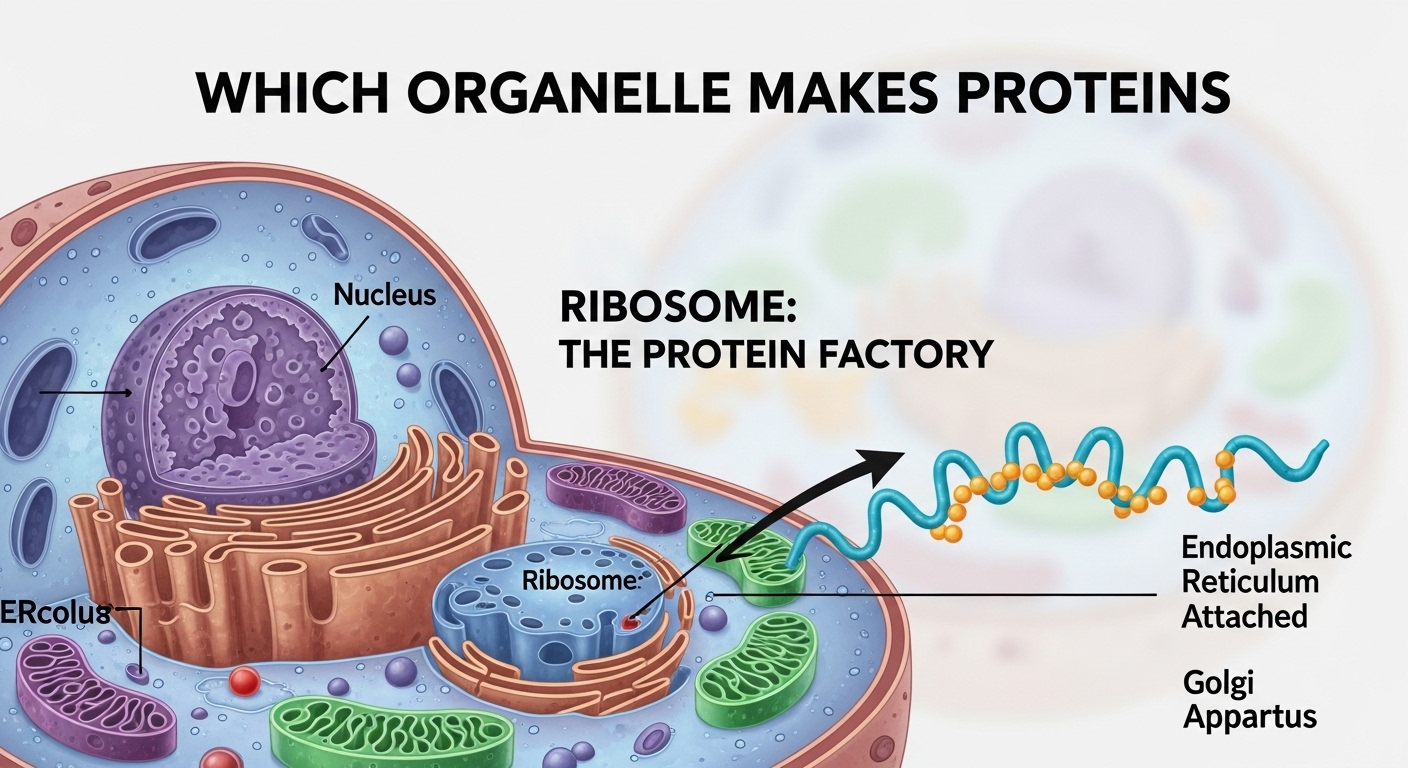
Proteins are essential molecules in all living organisms, performing functions ranging from enzyme catalysis to cellular structure maintenance. But have you ever wondered which organelle makes proteins in the cell? Proteins are not produced randomly; specific organelles within the cell are responsible for this vital process. Understanding this process sheds light on how our cells maintain life, adapt to changes, and repair themselves. In this article, we will explore the organelles involved in protein synthesis and their roles in cellular function.
The Basics of Cellular Function
Before diving into protein production, it’s crucial to understand how cells function. Cells are the basic units of life, containing a variety of organelles, each with specialized functions. These organelles work in harmony to maintain homeostasis, process nutrients, and respond to internal and external signals. Organelles like the nucleus, ribosomes, and mitochondria are particularly important in the synthesis and regulation of proteins.
Protein synthesis is a cornerstone of cellular activity because proteins are responsible for nearly all physiological processes. Without them, cells cannot repair damage, transport molecules, or communicate effectively. Hence, knowing which organelle makes proteins provides insight into a fundamental aspect of life.
The Ribosome: The Protein-Making Organelle
The ribosome is the primary organelle responsible for producing proteins. It can be found floating freely in the cytoplasm or attached to the rough endoplasmic reticulum (RER). Ribosomes are composed of ribosomal RNA (rRNA) and proteins, forming two subunits that work together to translate messenger RNA (mRNA) into proteins.
When a gene is expressed, its DNA sequence is transcribed into mRNA, which then travels to the ribosome. The ribosome reads the mRNA sequence and assembles amino acids in the correct order to form a protein. This process, known as translation, is central to cell function. Free ribosomes often produce proteins that function within the cytoplasm, while ribosomes attached to the RER synthesize proteins destined for secretion or membrane insertion.
Key Functions of Ribosomes:
-
Synthesizing enzymes, structural proteins, and signaling molecules
-
Translating genetic instructions from mRNA into functional proteins
-
Supporting cellular growth, repair, and maintenance
The ribosome’s efficiency and accuracy are crucial for overall cellular health. Mutations or defects in ribosomal function can lead to diseases known as ribosomopathies, which highlight the organelle’s importance.
The Role of the Endoplasmic Reticulum in Protein Synthesis
The endoplasmic reticulum (ER) is a network of membranes that play a pivotal role in protein synthesis and folding. It is divided into two types: the rough ER (RER) and smooth ER (SER).
The rough ER gets its name from the ribosomes attached to its surface. These ribosomes actively translate mRNA into proteins, which are then inserted into the ER lumen for folding and modification. Proteins synthesized here are often secreted from the cell, embedded into the plasma membrane, or sent to lysosomes.
In contrast, the smooth ER is primarily involved in lipid synthesis and detoxification but can influence protein synthesis indirectly by providing the lipid environment necessary for proper protein insertion and trafficking.
The collaboration between ribosomes and the ER ensures that proteins are not only synthesized but also properly folded, modified, and targeted to their destination, ensuring functional integrity within the cell.
Golgi Apparatus: The Protein Packaging and Distribution Center
Once proteins are synthesized and folded, they often require further modification, sorting, and delivery. This is where the Golgi apparatus comes into play. Acting like a cellular post office, the Golgi modifies proteins by adding carbohydrate groups, phosphate groups, or other chemical modifications, a process known as post-translational modification.
The Golgi then packages these proteins into vesicles, which are transported to various locations within the cell or secreted into the extracellular environment. Without the Golgi apparatus, proteins could not reach their correct destination, potentially leading to cellular dysfunction.
Key Roles of the Golgi Apparatus:
-
Modifying proteins for proper function
-
Sorting proteins for delivery to different cell compartments
-
Packaging proteins for secretion or membrane insertion
The Golgi’s function highlights the collaborative nature of cellular organelles in ensuring that protein synthesis is not only about making proteins but also about ensuring they are functional and properly delivered.
Connection
Although the mitochondria are primarily known as the powerhouse of the cell, they also play a crucial role in protein production. Mitochondria generate ATP, which is required for many energy-dependent steps of protein synthesis, including amino acid activation and ribosomal assembly.
Moreover, mitochondria have their own DNA and ribosomes, allowing them to synthesize a small subset of proteins essential for oxidative phosphorylation and energy production. These mitochondrially encoded proteins are critical for cellular energy metabolism and survival, emphasizing that protein synthesis is not restricted to just one organelle.
Importance of Protein Synthesis in Human Health
Proteins regulate nearly all cellular processes, and the ability of cells to produce proteins accurately is essential for health. Errors in protein synthesis can lead to a range of disorders, including:
-
Genetic diseases, such as cystic fibrosis, caused by mutations in specific protein-coding genes
-
Neurodegenerative diseases, like Alzheimer’s, due to misfolded proteins
-
Immune deficiencies, when proteins essential for immune responses are absent or malfunctioning
By understanding which organelle makes proteins, scientists and medical researchers can develop targeted therapies, improve drug delivery, and enhance cellular function through gene therapy and molecular medicine.
Frequently Asked Questions (FAQs)
Q1: Which organelle makes proteins in eukaryotic cells?
A1: The ribosome is the main organelle responsible for protein synthesis. It reads mRNA sequences and assembles amino acids into proteins.
Q2: Do all cells have ribosomes?
A2: Yes, all living cells, including prokaryotic and eukaryotic cells, have ribosomes. In eukaryotes, ribosomes can be free-floating or attached to the rough ER.
Q3: Can protein synthesis occur outside the ribosome?
A3: Ribosomes are the primary site, but mitochondria also have their own ribosomes for producing specific proteins necessary for energy metabolism.
Q4: How does the Golgi apparatus assist in protein function?
A4: The Golgi apparatus modifies, sorts, and packages proteins for delivery to their functional destinations inside or outside the cell.
Q5: Why is protein synthesis vital for human health?
A5: Proteins are essential for enzyme function, structural integrity, communication, and immune defense. Errors in synthesis can lead to serious diseases.
Conclusion
Proteins are the molecular workhorses of the cell, and their production is a highly coordinated process involving several organelles. The ribosome stands out as the primary organelle responsible for protein synthesis, translating genetic instructions into functional molecules. Supporting organelles like the endoplasmic reticulum, Golgi apparatus, and mitochondria play critical roles in folding, modifying, and energizing protein production. Understanding which organelle makes proteins is not only fascinating but also crucial for advancements in medicine, genetics, and cellular biology.
From health and disease management to biotechnology innovations, the journey of protein synthesis within a cell exemplifies the complexity and precision of life itself.
Disclaimer
This article is intended for educational purposes only. While it provides accurate scientific information, it should not be used as a substitute for professional medical advice, diagnosis, or treatment. Always consult a qualified healthcare provider for any medical concerns or questions regarding protein-related cellular functions.