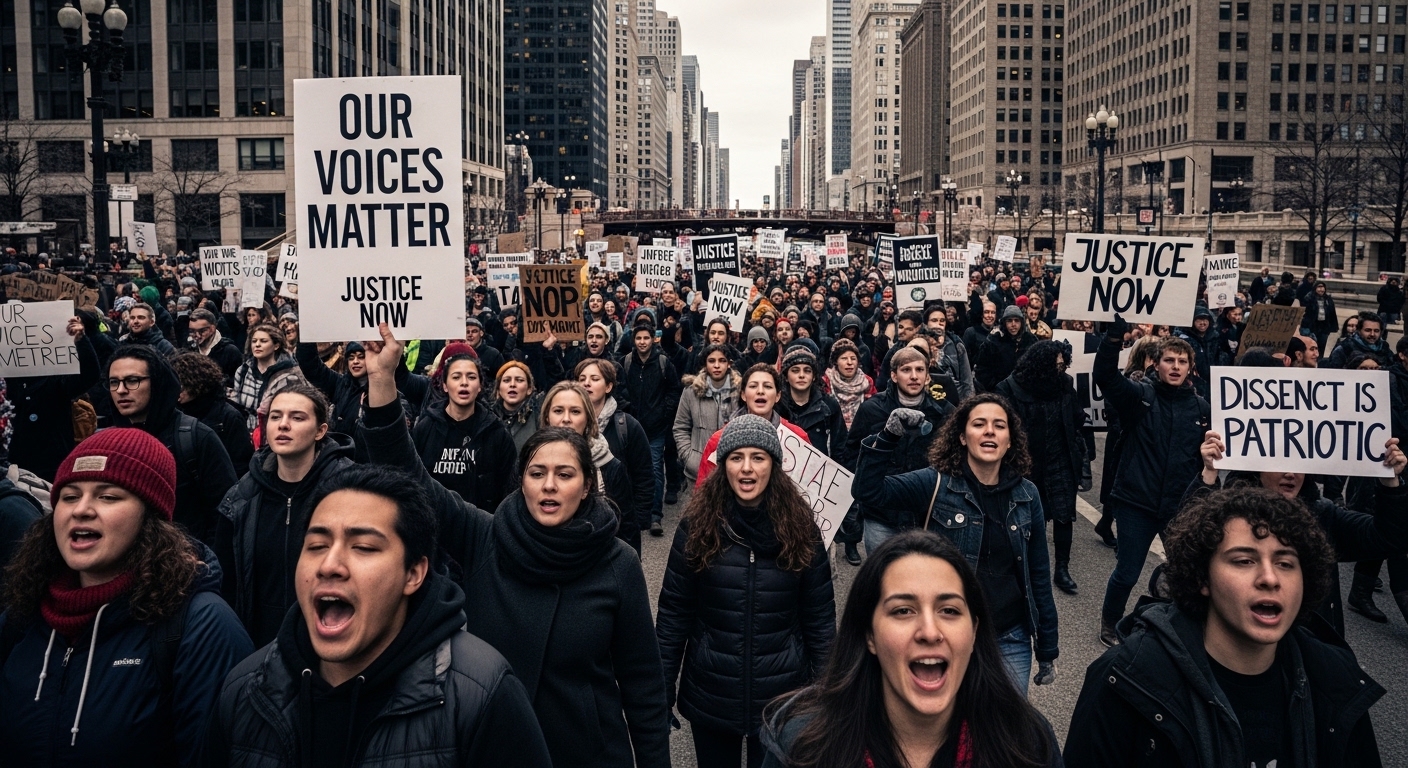
Public protest has long been a defining feature of Chicago’s civic identity. From labor marches in the early industrial era to civil rights demonstrations and contemporary calls for reform, the city has consistently served as a stage where social tensions, political demands, and community aspirations are made visible. When people search for chicago protests today, they are often looking for more than breaking news. They are trying to understand why people are gathering, what they are demanding, and what those actions reveal about life in one of America’s most influential cities.
Chicago’s size, diversity, and political history make it a natural center for public dissent. Protests here are rarely isolated events; they are part of longer conversations about justice, power, and accountability. Each gathering in a park, outside a government building, or along a major avenue adds another chapter to a story that has been unfolding for generations.
This article explores the broader meaning of contemporary protest activity in Chicago. Rather than focusing on a single march or rally, it examines the social forces, historical roots, and civic consequences that shape demonstrations across the city. By doing so, it offers a deeper understanding of what people often mean when they talk about chicago protests today.
Historical Roots of Protest Culture in the City
Chicago’s reputation as a protest city did not emerge overnight. In the late nineteenth and early twentieth centuries, it was a hub of industrial labor, attracting workers from across the United States and around the world. Harsh working conditions and economic inequality led to some of the nation’s earliest labor protests, including strikes that helped define workers’ rights nationwide.
The mid-twentieth century brought another wave of activism. Civil rights leaders organized marches to challenge segregation, housing discrimination, and unequal access to education. These demonstrations were often met with resistance, but they forced uncomfortable conversations into the public sphere and laid the groundwork for policy changes.
By the late 1960s, Chicago was again in the global spotlight during mass protests surrounding a major national political convention. Images from that period cemented the city’s image as a place where political conflict and public expression collide. Understanding this history helps explain why modern observers so frequently search for chicago protests today: the city has long been a barometer of national unrest.
Social and Political Climate Shaping Demonstrations
Protests do not happen in a vacuum. They are shaped by economic conditions, political decisions, and cultural shifts that affect everyday life. In Chicago, factors such as income inequality, neighborhood segregation, and debates over public safety contribute to a climate where public demonstration feels necessary to many residents.
Local politics also play a role. Chicago’s strong mayoral system and influential city council mean that decisions made at City Hall can have immediate, visible effects on communities. When residents feel unheard through traditional channels, protest becomes a way to reclaim visibility and demand accountability.
National issues often intersect with local concerns. Federal policies related to immigration, policing, or social welfare can spark demonstrations that are both local in organization and national in message. This intersection helps explain the recurring attention on chicago protests today in both local and national media.
Chicago Protests Today as a Reflection of Urban Democracy
At its core, protest is a form of participation. In a city as large and complex as Chicago, demonstrations serve as a reminder that democracy is not limited to voting booths or council chambers. When people gather publicly, they are asserting their right to be seen and heard.
The phrase chicago protests today captures this ongoing process. It suggests immediacy and relevance, emphasizing that civic engagement is not a relic of the past but a living practice. Whether the issue is housing affordability or police reform, protests signal that residents are actively negotiating the meaning of justice and fairness in their city.
Importantly, these gatherings also reveal diversity within dissent. Different neighborhoods, age groups, and cultural communities often bring distinct perspectives to the same issue. This plurality is a strength, even when it leads to disagreement, because it reflects the city’s complex social fabric.
Key Issues Commonly Driving Modern Protests
Policing and Public Safety
One of the most visible drivers of protest activity in Chicago involves questions of policing and public safety. High-profile incidents, policy changes, or budget debates can quickly mobilize residents who are concerned about accountability and community trust. Demonstrations around these issues often emphasize transparency, reform, and the need for dialogue between law enforcement and the communities they serve.
Racial Justice and Civil Rights
Chicago’s history of segregation and racial inequality continues to influence contemporary activism. Protests focused on racial justice draw connections between past injustices and present-day disparities in education, health, and economic opportunity. These demonstrations often frame their demands within a broader struggle for civil rights, linking local experiences to national movements.
Economic Inequality and Cost of Living
Rising housing costs, wage stagnation, and uneven development have made economic issues central to many protests. Marches and rallies addressing these concerns highlight the gap between Chicago’s booming downtown and under-resourced neighborhoods. For many participants, protest is a way to demand policies that prioritize affordability and equity.
Housing, Education, and Community Resources
Access to quality housing and education remains a recurring theme in Chicago’s protest landscape. School closures, zoning decisions, and public housing policies can all spark public demonstrations. These protests often emphasize the importance of community input and long-term investment in neighborhood stability.
The Role of Community Organizations and Grassroots Networks
Behind most protests are networks of organizers who invest time and resources into mobilization. Community organizations, faith groups, and advocacy coalitions play a crucial role in shaping the message and logistics of demonstrations. Their work ensures that protests are not just spontaneous expressions of anger but coordinated efforts with clear goals.
Grassroots leadership also helps sustain movements beyond a single event. By providing education, legal support, and platforms for marginalized voices, these organizations transform protest from a moment into a process. This infrastructure is a key reason why discussions about chicago protests today often point to continuity rather than isolated incidents.
Media Coverage and Public Perception
How protests are portrayed in the media significantly influences public understanding. Headlines and images can frame demonstrations as either legitimate expressions of concern or sources of disruption. In Chicago, media narratives often reflect broader debates about order, safety, and free expression.
Social media has added another layer to this dynamic. Participants can now share their own perspectives in real time, challenging or reinforcing mainstream coverage. This decentralized storytelling means that no single narrative fully defines what people mean when they discuss chicago protests today.
Law Enforcement, City Leadership, and Public Response
The response of city officials and law enforcement agencies shapes the trajectory of protest movements. Decisions about permits, crowd management, and public statements send signals about how dissent is valued. In Chicago, these responses are closely watched by activists and residents alike.
Constructive engagement can reduce tension and open pathways for dialogue, while heavy-handed tactics often intensify conflict. Over time, patterns of response become part of the public memory, influencing expectations for future demonstrations.
The Impact on Daily Life and Local Businesses
Protests inevitably affect daily routines. Street closures, transit delays, and increased police presence can disrupt normal activity. Local businesses may experience both challenges and opportunities, depending on the nature and location of demonstrations.
While some view these disruptions as inconveniences, others see them as a necessary cost of civic engagement. The visibility of protest forces issues into public consciousness, reminding residents that social change often requires collective sacrifice.
Digital Activism and the Influence of Social Media
Digital platforms have transformed how protests are organized and remembered. Online campaigns can mobilize participants quickly, while livestreams and posts document events for a global audience. In Chicago, digital activism often complements physical demonstrations, extending their reach and longevity.
This blend of online and offline engagement ensures that conversations sparked by chicago protests today continue long after crowds disperse. It also allows younger generations to participate in civic life in ways that feel accessible and immediate.
Comparisons With Past Protest Movements in Chicago
Comparing contemporary demonstrations with earlier movements reveals both continuity and change. While the core demands for justice and accountability remain familiar, the language, tactics, and participants have evolved. Modern protests are often more intersectional, addressing multiple issues simultaneously.
These comparisons highlight the adaptability of protest as a civic tool. Each generation reshapes it to fit its context, ensuring that public dissent remains relevant in a changing city.
Legal Framework: Rights, Responsibilities, and Free Speech
Protest in Chicago operates within a legal framework designed to balance free expression with public order. Permits, regulations, and court rulings define what is allowed, but they are also frequently contested. Activists often view legal challenges as part of the broader struggle for democratic space.
Understanding these legal dimensions adds depth to discussions about chicago protests today, emphasizing that dissent is both a right and a responsibility.
Long-Term Effects on Policy and Civic Engagement
While not every protest leads to immediate change, sustained activism can influence policy over time. Public pressure has historically contributed to reforms in labor law, civil rights, and local governance. In Chicago, protest movements have also inspired greater civic participation, encouraging residents to engage in community meetings, elections, and advocacy.
These long-term effects underscore the importance of viewing protests as part of an ongoing democratic process rather than isolated events.
Conclusion: What Ongoing Protests Say About Chicago
Chicago’s protest culture reflects a city deeply engaged with its own challenges and possibilities. When people search for chicago protests today, they are tapping into a tradition of public dialogue that spans generations. These demonstrations reveal frustration, hope, and a persistent belief that collective action can shape the future.
Rather than viewing protests solely as moments of disruption, it is more productive to see them as expressions of civic commitment. They remind residents and leaders alike that democracy is an active practice, continually renegotiated in streets, parks, and public squares across the city.
Frequently Asked Questions
Why does Chicago experience frequent protests?
Chicago’s size, diversity, and history of political activism make it a natural center for public demonstration. Social, economic, and political factors regularly bring people into the streets.
Are modern protests different from those in the past?
While the core goals of justice and accountability remain, modern protests often use digital tools and emphasize intersectional issues, reflecting contemporary realities.
How do protests influence local policy?
Sustained public pressure can shape policy discussions, influence elections, and lead to reforms over time, even if changes are not immediate.
What rights do protesters have in Chicago?
Protesters are protected by constitutional rights to free speech and assembly, though these rights operate within local regulations designed to maintain public safety.
Why is public interest in chicago protests today so high?
The phrase captures both immediacy and relevance, reflecting a desire to understand how current events connect to broader social and political trends.