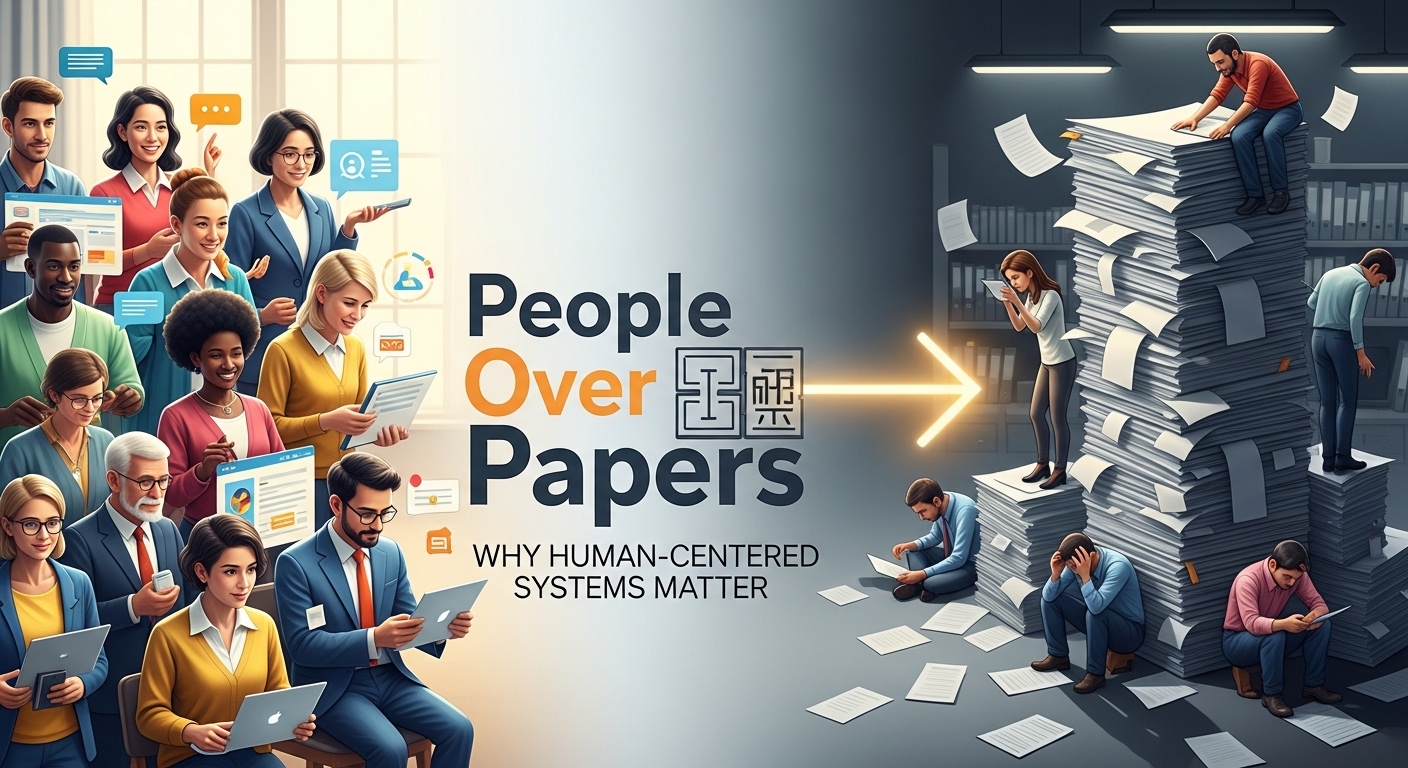
Modern societies often pride themselves on efficiency, compliance, and order. Systems are built on forms, records, credentials, and approvals designed to create structure and accountability. While these mechanisms serve a purpose, they can sometimes overshadow the very individuals they are meant to support. This tension has led to growing conversations around people over papers, a phrase that captures the desire to restore humanity, empathy, and fairness within rigid systems. The idea does not reject rules entirely; instead, it questions whether systems should ever outweigh human dignity.
Across cultures and industries, this mindset has gained relevance as individuals increasingly feel unseen, unheard, or reduced to files and identification numbers. Understanding this shift requires looking beyond policies and examining the human stories shaped by them.
Human-Centered Thinking in Modern Society
Human-centered thinking places lived experience at the core of decision-making. It recognizes that policies, institutions, and frameworks exist to serve people, not the other way around. When organizations prioritize efficiency alone, they risk creating environments that feel cold and inaccessible.
This philosophy emphasizes empathy, flexibility, and contextual understanding. It values personal circumstances, emotional realities, and social complexity. Rather than viewing individuals as problems to be processed, human-centered approaches see them as participants in shared systems that must adapt as societies evolve.
Why Documentation Became Dominant
Documentation plays a vital role in governance and organizational stability. Records ensure consistency, prevent fraud, and support accountability. Over time, however, reliance on documentation has expanded rapidly due to globalization, population growth, and digital transformation.
Institutions increasingly depend on paperwork to manage risk and maintain control. In doing so, they often create layers of verification that unintentionally exclude or delay those who lack access, literacy, or resources. The dominance of paperwork is not inherently harmful, but unchecked expansion can distance institutions from real human needs.
The Emotional Cost of Bureaucracy
Beyond inconvenience, excessive bureaucracy carries emotional weight. Long waits, repeated rejections, and unclear requirements can cause frustration, anxiety, and helplessness. Individuals navigating complex systems often feel powerless, especially when their personal circumstances do not align neatly with standardized criteria.
This emotional toll is rarely acknowledged in official metrics. Success is measured by compliance rates or processing speed, while human stress remains invisible. Over time, this disconnect erodes trust between people and institutions, weakening social cohesion.
Human Impact Across Key Sectors
Education
In educational systems, rigid documentation requirements can prevent talented individuals from accessing opportunities. Students may be defined more by transcripts than by potential, creativity, or resilience. When learning becomes transactional, the human joy of discovery is diminished.
Healthcare
Healthcare systems rely heavily on records, insurance approvals, and standardized protocols. While these ensure safety and coordination, they can also delay urgent care or limit treatment options. Patients may feel like cases rather than individuals, especially when time constraints reduce meaningful interaction.
Immigration and Public Services
Public services often represent the most visible clash between humanity and bureaucracy. Individuals seeking safety, employment, or stability may encounter systems that prioritize documents over personal histories. In these contexts, the idea of people over papers emerges as a moral appeal rather than a procedural argument, highlighting the human consequences of inflexible rules.
Cultural and Ethical Dimensions
Cultural values strongly influence how societies balance rules and compassion. Some cultures emphasize collective responsibility and adaptability, while others prioritize strict adherence to procedure. Neither approach is inherently right or wrong, but ethical tension arises when systems fail to account for vulnerability.
Ethically, institutions face a responsibility to minimize harm. When rules unintentionally cause suffering, ethical reflection becomes necessary. Compassion does not weaken systems; it strengthens their legitimacy by aligning them with shared human values.
Technology, Automation, and Empathy
Digital systems have transformed how institutions operate. Automation improves speed and accuracy, but it can also reduce opportunities for discretion. Algorithms do not interpret emotion, context, or nuance unless explicitly designed to do so.
As technology advances, the challenge lies in embedding empathy into digital processes. Human oversight remains essential, ensuring that automated decisions can be questioned and revised. Technology should support humane outcomes, not replace human judgment entirely.
Balancing Structure With Compassion
Structure and compassion are not opposites. Well-designed systems can uphold standards while remaining flexible. Clear guidelines paired with discretionary authority allow institutions to respond to exceptional circumstances without undermining fairness.
This balance requires training, cultural awareness, and leadership commitment. When decision-makers are encouraged to consider context, systems become more resilient and trustworthy. The goal is not chaos, but thoughtful adaptability grounded in respect.
Real-World Reflections
Across the world, organizations experimenting with human-centered reforms report improved satisfaction and engagement. When individuals feel seen and respected, cooperation increases and conflict decreases. These outcomes suggest that prioritizing humanity is not only ethical but practical.
The broader conversation continues to evolve as societies reassess what progress truly means. Efficiency alone no longer defines success; social well-being and trust now play equally important roles. This ongoing reflection keeps the principle of people over papers relevant in contemporary discourse.
Conclusion
Modern systems will always require structure, records, and accountability. However, when documentation becomes the primary focus, humanity risks being sidelined. Re-centering empathy within institutions does not eliminate rules; it redefines their purpose. By acknowledging personal realities and emotional impact, societies can create systems that are both effective and humane. The enduring relevance of people over papers lies in its reminder that progress should serve human dignity above all else.
Frequently Asked Questions (FAQs)
What does people over papers mean in a social context?
It refers to valuing human needs, experiences, and dignity more than rigid documentation or bureaucratic procedures.
Is prioritizing people over paperwork practical?
Yes. When implemented thoughtfully, compassionate systems often improve cooperation, trust, and long-term efficiency.
Can rules and empathy coexist?
Absolutely. Effective systems balance consistency with flexibility, allowing human judgment where appropriate.
Why is this idea gaining popularity today?
Increased globalization, migration, and digitalization have exposed the emotional costs of inflexible systems, prompting calls for reform.
Does people over papers reject laws and regulations?
No. It encourages applying rules with awareness of context rather than blind enforcement.
Disclaimer
This article is intended for informational and educational purposes only. It does not provide legal, medical, or professional advice. Interpretations and perspectives presented are general in nature and may not apply to every situation or jurisdiction. Readers are encouraged to consult qualified professionals or official sources for guidance specific to their circumstances.
If you’re looking for a complete and easy-to-understand overview of recent game updates, our detailed article “Marvel Rivals Patch Notes” is highly recommended. It breaks down balance changes, gameplay improvements, and technical updates in a clear, player-focused way, making it a valuable resource for both casual and competitive players who want to stay informed.