Tarot cards have fascinated humanity for centuries, offering a mirror to the inner self and a symbolic language for understanding life’s mysteries. Among these cards, the fool tarot holds a uniquely powerful position. Often misunderstood due to its name, this card represents beginnings, innocence, potential, and the courage to step into the unknown.
Unlike cards associated with endings or conclusions, this archetype captures the moment before the journey begins. It reflects the human experience at its most raw and open—where fear and excitement coexist. Far from symbolizing ignorance, the card highlights trust, curiosity, and faith in life itself.
This article explores the depth, history, symbolism, and psychological layers behind this iconic tarot card, revealing why it remains one of the most significant images in the entire tarot deck.
Table of Contents
ToggleHistorical Origins of The Fool Tarot
The roots of tarot can be traced back to 15th-century Europe, where tarot decks were initially used as playing cards. Over time, they evolved into tools for spiritual insight and philosophical reflection. The fool tarot card existed even in the earliest decks, though its interpretation has changed dramatically over the centuries.
In early Italian decks, the Fool was often portrayed as a wandering beggar or outsider, someone detached from society’s rules. This depiction reflected medieval views on madness and freedom, where those outside social structures were both feared and revered.
As tarot became intertwined with mysticism, astrology, and psychology in the 18th and 19th centuries, the Fool transformed into a symbol of divine innocence. Rather than madness, it came to represent sacred foolishness—the willingness to trust life without guarantees.
Visual Symbolism in The Fool Tarot Card
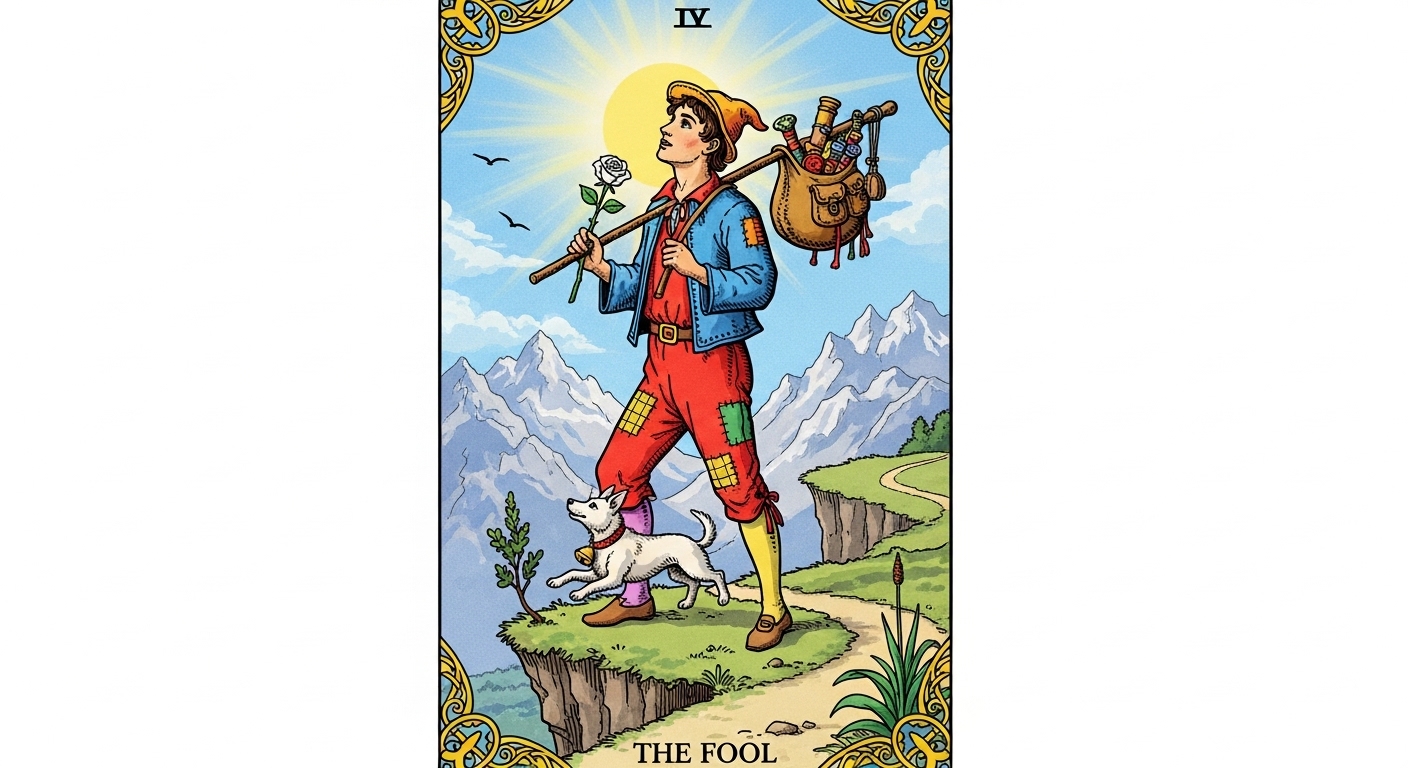
The imagery of this card is rich with symbolic meaning. Every detail conveys a deeper message about human experience and spiritual growth.
The Cliff and the Leap of Faith
One of the most striking symbols is the figure standing at the edge of a cliff. This represents risk, trust, and the moment before action. It reflects the human choice between remaining safe and stepping into growth.
The Small Bag
The bag carried by the Fool symbolizes untapped potential. It suggests that everything needed for the journey is already present, even if not fully understood yet.
The White Rose
Often depicted in the Fool’s hand, the white rose represents purity, innocence, and openness. It reinforces the idea that this archetype approaches life without hidden motives or fear-based intentions.
These visual elements collectively express the core message of the fool tarot—life is an adventure best met with openness rather than control.
The Fool Tarot in the Major Arcana
Within the tarot deck, the Major Arcana represents the soul’s journey through life. The Fool is traditionally numbered zero, emphasizing its role as both a beginning and a limitless potential.
Zero symbolizes emptiness and possibility at the same time. It is the blank page before the story is written. In this context, the Fool is not inferior to other cards but foundational. Every other archetype emerges from this original state of innocence and curiosity.
The Fool’s journey continues through the Major Arcana, encountering lessons of power, love, loss, and transformation. Yet, the essence of this card remains present throughout, reminding individuals to approach each stage with openness.
Upright Meaning of The Fool Tarot
When drawn upright, the fool tarot often signifies new beginnings, freedom, and spontaneity. It suggests a time when logic takes a back seat to intuition and trust.
This card encourages embracing uncertainty rather than resisting it. It invites individuals to explore new paths, relationships, or ideas without being paralyzed by fear of failure. The energy is youthful, optimistic, and adventurous.
Upright, this card often appears during moments of transition—when old patterns are dissolving and new opportunities are emerging. It reassures that uncertainty is not a threat but a gateway to growth.
Reversed Meaning of The Fool Tarot
In its reversed position, the Fool can indicate hesitation, fear, or reckless behavior. Rather than a healthy leap of faith, it may suggest impulsiveness without awareness.
This interpretation does not negate the card’s positive aspects but highlights imbalance. Fear of the unknown may be causing stagnation, or overconfidence may be leading to unnecessary risks.
The reversed Fool often invites reflection rather than action. It asks whether one is avoiding growth due to fear or rushing forward without grounding. In both cases, awareness is the key lesson.
Psychological Interpretation of The Fool Tarot
From a psychological perspective, the fool tarot represents the inner child—the part of the psyche that remains curious, imaginative, and unburdened by expectations.
Carl Jung’s concept of archetypes aligns closely with this symbolism. The Fool embodies the archetype of the innocent, one who explores life without preconceptions. This aspect of the psyche is essential for creativity and emotional renewal.
Psychologically, encountering this card may reflect a desire to reconnect with spontaneity or break free from rigid self-definitions. It serves as a reminder that growth often begins where certainty ends.
Spiritual and Philosophical Significance
Spiritually, the Fool represents surrender to the divine flow of life. It symbolizes trust in a higher order beyond rational understanding.
Many spiritual traditions value “holy foolishness,” where wisdom arises not from control but from surrender. The fool tarot aligns with this philosophy, suggesting that enlightenment often comes through humility and openness rather than mastery.
Philosophically, the card challenges the idea that knowledge equals certainty. Instead, it proposes that true wisdom begins with curiosity and acceptance of not knowing.
The Fool Tarot in Love and Relationships
In matters of the heart, the fool tarot often symbolizes new romantic beginnings or a fresh emotional perspective. It encourages vulnerability and openness, essential qualities for meaningful connection.
This card may indicate a relationship that begins unexpectedly or without conventional expectations. It can also suggest approaching love with fewer defenses, allowing authenticity to guide interactions.
However, the Fool also reminds individuals to balance openness with awareness. Emotional freedom does not mean ignoring boundaries but trusting intuition while remaining present.
Career and Life Direction Interpretations
In professional contexts, the Fool suggests exploration and innovation. It often appears when someone is considering a career change, entrepreneurial venture, or creative pursuit.
Rather than guaranteeing success, the fool tarot emphasizes potential. It encourages taking calculated risks driven by passion rather than fear. This energy supports learning, experimentation, and adaptability.
The card also warns against becoming trapped by rigid definitions of success. True fulfillment may lie in paths that appear unconventional but resonate deeply.
The Fool Tarot and Personal Growth
Personal growth often requires letting go of certainty. The Fool symbolizes the courage to step into personal evolution without knowing the outcome.
This card reflects moments when identity is in flux—when old roles no longer fit and new ones have yet to form. The fool tarot reassures that this in-between space is not failure but transformation.
Growth, according to this archetype, is less about control and more about trust. It suggests that embracing vulnerability can lead to deeper self-understanding.
Cultural Influence and Modern Perception
In modern culture, the Fool has transcended tarot to appear in literature, film, and psychology. The archetype of the innocent traveler resonates across storytelling traditions.
Contemporary interpretations emphasize empowerment rather than naivety. The fool tarot is increasingly seen as a symbol of conscious choice—the decision to embrace uncertainty despite knowing the risks.
This shift reflects broader cultural values that prioritize authenticity, exploration, and personal meaning over rigid social structures.
Misconceptions About The Fool Tarot
One common misconception is that the Fool represents stupidity or lack of intelligence. In truth, it symbolizes openness rather than ignorance.
Another misunderstanding is that the card encourages irresponsible behavior. Instead, the fool tarot promotes mindful risk—actions guided by intuition and self-trust rather than recklessness.
Recognizing these misconceptions allows for a deeper appreciation of the card’s wisdom and relevance.
How The Fool Tarot Relates to Life Cycles
Life unfolds in cycles of beginnings, growth, endings, and renewal. The Fool represents the moment before each new cycle begins.
Even after completing one phase, the Fool’s energy returns, reminding individuals that every ending contains the seed of a new beginning. The fool tarot thus exists not only at the start of life’s journey but throughout it.
This cyclical understanding emphasizes continuity rather than linear progression, offering comfort during times of change.
Conclusion
The Fool Tarot card stands as one of the most profound symbols within the tarot tradition. It represents beginnings without guarantees, faith without certainty, and courage without armor. Far from being naïve, it embodies a deep wisdom rooted in trust, curiosity, and openness to life’s unfolding journey.
By understanding its historical roots, symbolic imagery, psychological depth, and spiritual significance, one can appreciate how this card reflects the human experience itself. Whether encountered in moments of change or reflection, the fool tarot serves as a gentle reminder that growth often begins when we dare to step forward without knowing exactly where the path will lead.
FAQs
What does The Fool Tarot card truly represent?
It represents new beginnings, trust, potential, and openness to life’s uncertainties rather than ignorance.
Is The Fool Tarot a positive or negative card?
It is generally positive, symbolizing opportunity and growth, though its message depends on context and balance.
Why is The Fool Tarot numbered zero?
Zero signifies limitless potential and the state before creation, emphasizing beginnings and infinite possibility.
Can The Fool Tarot appear during major life changes?
Yes, it often appears during transitions, signaling a fresh chapter or new perspective.
Does The Fool Tarot encourage risk-taking?
It encourages mindful trust and intuition rather than reckless behavior.